Did you know that every single atom in your body was forged inside a dying star? Wild, right? We're literally stardust with anxiety and a Netflix subscription. But here's the thing — for the past century, astronomers have been pretty smug about a little theory called the Standard Model of Cosmology. It's the rulebook for how the universe works: how it started, how it expands, how it's supposed to behave. We've built entire careers, textbooks, and Nobel Prizes on it.
And then NASA's James Webb Space Telescope went and found something that might just flip the whole table over.
I've been following space news for years, and I can't remember the last time the scientific community felt this… rattled. Not in a "huh, that's odd" way. More like a "we may have been wrong about literally everything" way.
The Discovery That Made Astrophysicists Spill Their Coffee
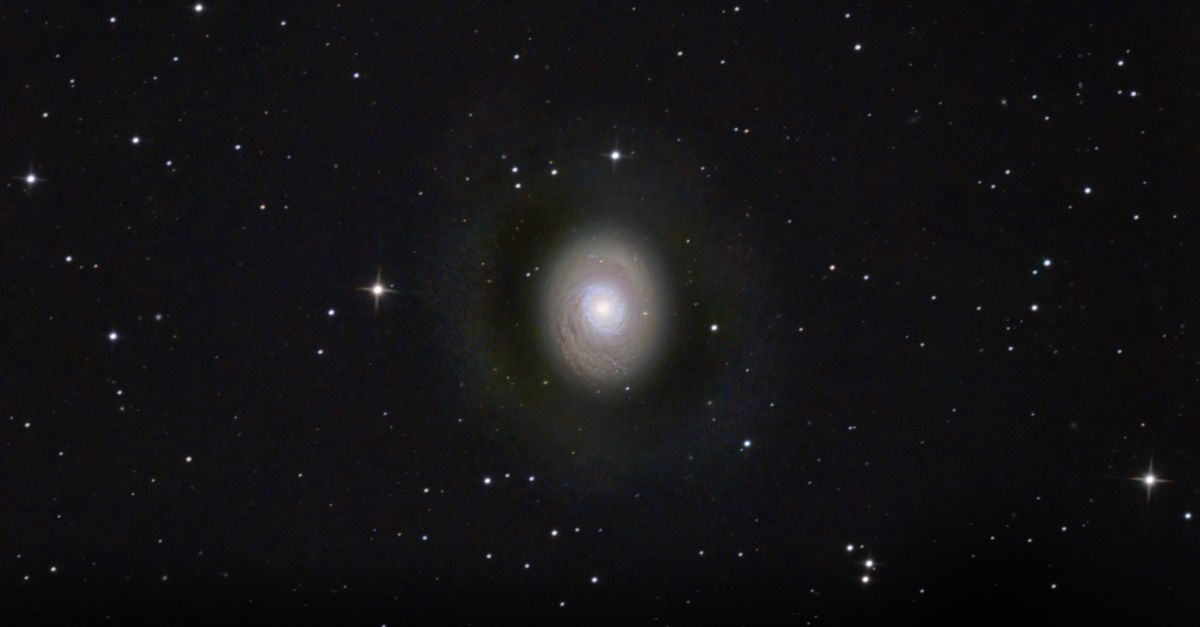
Let's talk about what JWST actually found. In its deep-field observations, the telescope spotted a collection of galaxies that are far too massive, far too mature, and far too early in the universe's timeline.
We're talking galaxies that existed just 300 to 500 million years after the Big Bang. According to our current models, that's not enough time for anything that big and organized to form. It's like finding a fully grown oak tree in a garden you planted last Tuesday.
The galaxies JWST spotted — some of them nicknamed "universe breakers" by the researchers themselves — appear to have the mass of the Milky Way. The Milky Way took billions of years to get where it is. These cosmic overachievers apparently did it in a cosmic eyeblink.
Here's what most people miss: it's not just one weird galaxy. It's a pattern. Dozens of them. When you find one anomaly, you raise an eyebrow. When you find dozens, you start rewriting textbooks.
Why This Isn't Just "Scientists Being Dramatic"
I know what you're thinking. Scientists hype stuff up all the time, and then it turns out to be a measurement error or a smudge on the lens.
And honestly? That's usually the right instinct. Science is self-correcting, and most "revolutionary" findings get walked back within a year. I've learned to be skeptical of breathless headlines — including, ironically, the one I'm writing right now.
But this is different, and here's why:
- The data is coming from multiple independent teams. Different researchers, different methods, same baffling results.
- The instruments are the best we've ever built. JWST isn't a blurry backyard telescope. It's a $10 billion engineering miracle sitting a million miles from Earth.
- The "it's just calibration error" excuse is running out of road. Early explanations — redshift miscalculations, dust interference — have been tested and largely ruled out.
When three separate groups using different techniques all point at the same impossible thing, you don't get to shrug it off anymore.

The Three Ways This Could End (And None of Them Are Boring)
So what happens if these galaxies are exactly as massive and mature as they appear? Cosmologists are quietly sketching out three scenarios, and let me tell you, they range from "mildly annoying" to "burn the textbooks."
1. Our timeline is wrong.
Maybe the universe is older than the 13.8 billion years we've been confidently quoting. If the Big Bang happened earlier than we think, those galaxies would have had more time to bulk up. This one's the least dramatic — a tweak, not a tear-down.
2. Galaxy formation is way faster than we thought.
Maybe early galaxies grew at a rate our models never predicted. This would mean rewriting the physics of how gas, dust, and dark matter clump together. Messy, but survivable.
3. The Standard Model itself has a crack in it.
This is the spicy one. It could mean our understanding of dark matter, dark energy, or the fundamental expansion of the universe is incomplete — or flat-out wrong. And that's the kind of thing that doesn't just revise a chapter. It writes a whole new book.
Let's be honest: option three is the one keeping physicists up at night. And secretly? It's the one they're most excited about. Because being wrong is how science gets more right.
What This Means for You (Yes, You Specifically)
You might be wondering why any of this matters when you've got rent due and a fridge that's making a weird noise.
Fair. But here's my take: this is the biggest "we don't know" moment in cosmology in a generation, and you're alive to watch it unfold in real time. That's genuinely rare. People lived and died during entire centuries where the big questions sat frozen. We get to watch the plot twist happen live.
Plus, there's something humbling and kind of beautiful about it. We built the most powerful telescope in human history, pointed it at the edge of everything, and the universe basically said, "Cute theory. Watch this."
If that doesn't give you a tiny existential thrill, I don't know what will.
The Question Nobody's Asking Yet
Here's the thing that nags at me. Every time we build a better instrument, we find something that breaks our models. Galileo's telescope shattered the idea that everything orbited Earth. Hubble's discoveries showed us the universe was expanding. Now JWST is hinting that our timeline of cosmic history might be built on sand.
At what point do we admit that the pattern isn't the anomalies — it's our confidence?
I'm not saying the Standard Model is dead. It's not. It works brilliantly for tons of things. But "works for most things" and "is actually true" aren't the same sentence, and JWST is making that distinction harder to ignore.
So here's my challenge to you: don't just scroll past the next "universe-breaking" headline. Follow the story. Watch the papers come out over the next year or two. Because you're not just reading about the history of the cosmos — you're watching it get rewritten, in real time, by a telescope that keeps finding things it was never supposed to find.
The universe, it turns out, didn't read our rulebook. And honestly? That's the most exciting thing about it.
